
How We’ve Adapted to Change: Lessons from Years in Corporate Events

Updated: Feb 26
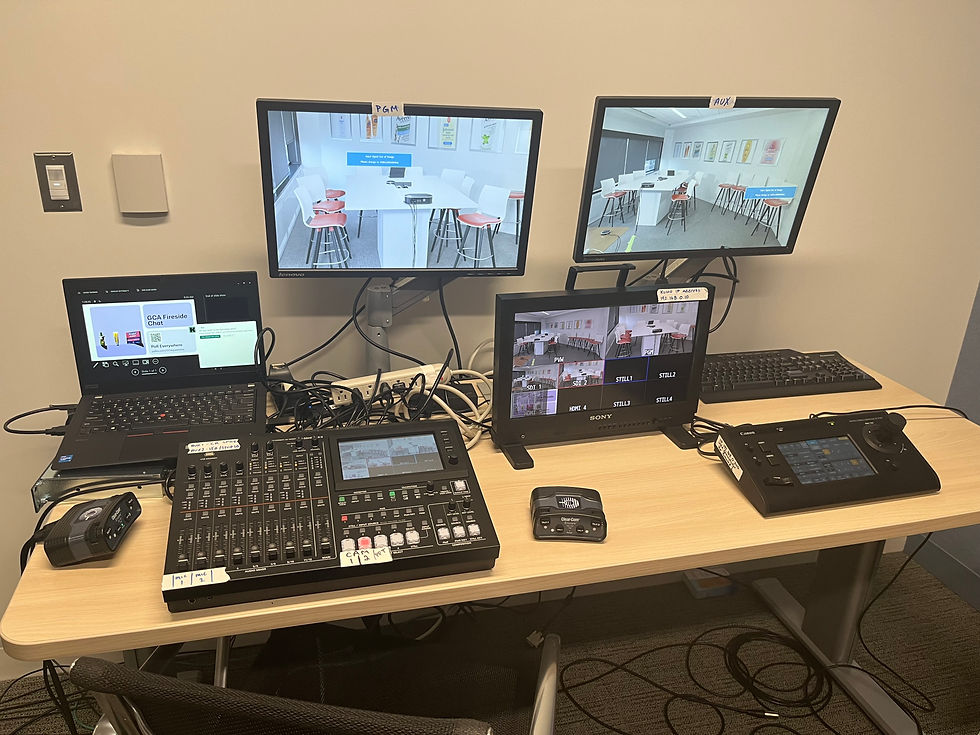
Corporate events have undergone a radical transformation over the last decade. Staying relevant has required more than just updated equipment; it’s demanded a complete psychological shift in how we approach engagement and technical production.
At AX3 Studios, our journey through these changes has yielded insights that now form the bedrock of our high-level production strategy. This is how we’ve adapted and why these lessons are critical for any organization looking to make an impact in the coming years.
Redefining Connectivity through Strategic Technology
In previous eras, event technology was often viewed as a utility or as means to amplify sound or project an image. Modern events treat technology as the primary interface for connection. The transition from physical-only gatherings to digitally-enhanced experiences required a steep learning curve regarding user experience (UX) within an event setting.
Tech as a Problem Solver
We’ve learned that adding tech for the sake of novelty often confuses the audience. Instead, technology must solve a problem. Whether it's using AI-driven networking tools or immersive LED backdrops that react to a speaker’s tone, the goal's always clarity and immersion. High-production value acts as a signal of quality to attendees, ensuring their time is valued through seamless execution.
The Evolution of the Hybrid Model
The most significant pivot in our industry was the rise of the hybrid event. While virtual events kept the world connected during crises, the return to physical spaces didn’t end the digital component. Instead, it fused the two. We’ve found that hybrid events aren’t merely a backup plan but a strategy for exponential growth.
The Rise of Asynchronous Engagement
Time is a luxury, which is one of the most important lessons we took away from the digital transition. In the past, a guest's attendance at a 9:00 AM keynote was permanently erased. These days, the "event" begins well before the first microphone is switched on and continues long after the stage has been cleaned. This is referred to as asynchronous interaction.
Attendees can begin networking in chat rooms weeks before the event, watch introductory movies, and download documents by using pre-event portals. This creates a feeling of belonging. When people finally show up at the location, they are peers carrying on a conversation rather as complete strangers.
Pre-Event Content: Short "hype" videos or speaker interviews.
On-Demand Access: Making sessions available for replay within minutes of ending.
Extended Networking: Keeping digital lounges open for a week post-event.
This approach respects the attendee’s schedule. It acknowledges that people learn at different speeds and in different time zones. By removing the pressure of "being there or missing out," we create a more relaxed and productive atmosphere.
Parity of Experience
By offering a robust digital component, organizations can tap into global talent and audiences that don’t have the means to travel. The challenge we’ve solved is ensuring parity of experience. Remote attendees shouldn’t feel like passive observers watching a grainy video from the back of a room. Multi-camera switching, interactive chat monitors, and virtual breakout sessions ensure that every guest, physical or digital, has a front-row seat.
Prioritizing Human-Centricity in an Automated World
With the influx of automation and rapid-fire content, there was a risk of losing the human element that makes events meaningful. We’ve discovered that the more technical an event becomes, the more intentional the human connection needs to be. Adaptation meant prioritizing "white space" in agendas: moments for unscripted conversation and physical interaction.
Designing for Diverse Learning Styles
We must acknowledge that "human" is not a single category as we go toward more human-centric events. Information is processed by people in a variety of ways. Some visitors require bright, clear images because they are visual learners. Others require flawless sound quality because they are auditory learners. Others still require movement and interaction since they are kinesthetic learners.
These differences must be taken into consideration in modern production. A stage is no longer thought of as only a location where someone can stand and speak. It seems to us as a multisensory center.
Visual Aids: High-contrast screens and live captioning for better accessibility.
Interactive Elements: Live polling and "choose your own adventure" segments where the audience picks the next topic.
Quiet Zones: Dedicated spaces with lower lighting and noise levels for those who need a break from the high-energy main floor.
When you design for everyone, you increase the total impact of your message. An inclusive event is a more successful event because it leaves no one behind.
Storytelling and Sensory Design
Events are emotional investments. Attendees remember how a keynote made them feel rather than the exact bullet points on a slide. Our production approach now emphasizes storytelling through cinematic lighting and sound design to evoke the intended emotional response. We build environments where the tech disappears and the message takes center stage.
Building Redundancy and Technical Resilience
Adapting to change means anticipating failures. Years of experience in event planning in Houston and elsewhere has taught us that the difference between an adequate production company and an elite one is a reliance on redundancy. Internet outages, software glitches, and audio feedback are physical realities that can destroy a brand’s reputation in seconds.
Planning for the Unexpected
We’ve moved toward a philosophy of technical resilience. This includes backup stream encoders, secondary power sources, and a dedicated technician for every high-risk node of the production. Future-proofing your event means investing in a foundation that remains stable even when the unexpected occurs. Don’t leave it to chance when your brand’s on the line.
The Role of Real-Time Data and Analytics
Having a backup generator isn't the only aspect of resilience. Having the information to make prompt decisions is also important. To find out if a session was successful, event planners used to have to wait for post-event questionnaires. We now "read the room" in real time using real-time data.
We monitor factors like digital engagement rates, where individuals are gathering and session dwell time. We may make quick adjustments if we observe that a particular breakout space is packed or that the digital audience is waning during a lengthy lecture.
Extending the Lifecycle of Professional Events
Events were traditionally considered a siloed experience; they started on Monday and ended on Wednesday. Adaptation has taught us that an event is just a high-intensity peak in a much longer community lifecycle. The most successful brands use the content generated during the live event to fuel a 365-day marketing engine.
Turning Events into Content Sets
We encourage our partners to treat the event as a production set. High-quality recording of sessions allows for the distribution of micro-content, podcasts, and follow-up webinars for months post-event. This continuous engagement transforms a single event into a long-term strategic asset that won’t fade away once the lights go down.
A Growing Commitment to Sustainable Execution
Environmental awareness is no longer optional for major corporate gatherings. The industry-wide shift toward digital assets over physical printed materials has been a welcome change. We’ve adapted our workflows to prioritize sustainable practices, from energy-efficient lighting to the elimination of single-use plastics in the control room. Being a modern leader in the event space means recognizing that global responsibility is a non-negotiable metric of success that shouldn’t be overlooked.
Embracing the Future of Experiences
Adapting to the future requires a balance of innovative technology and timeless human values. The lessons we’ve documented at AX3 Studios serve as a roadmap for creating experiences that resonate in a crowded digital landscape. As the industry continues to evolve, our commitment to technical excellence and emotional engagement remains constant.
The "Experience Economy" and Brand Loyalty
The age of information is coming to an end, and the age of experience is beginning. A YouTube video or a Google search can provide people with information. They attend business gatherings to feel like they are a part of something greater. This is the origin of brand loyalty.
A faultless manufacturing conveys the brand's dependability. The viewer can tell that the brand is meticulous when the lighting is exquisite and the transitions are fluid. All technological decisions are brand decisions.
Final Thoughts
At AX3 Studios, we don't just see ourselves as technical directors. We see ourselves as brand guardians. Our job is to make sure that the physical reality of the event matches the high-level vision of the company. When those two things align, the result is a powerful sense of trust that lasts for years.
Adaptation isn’t always easy, but it’s what keeps us moving forward. From embracing new formats to delivering creative solutions within budgets and focusing on personalization, our ability to evolve has helped us navigate even the most challenging times. Hire us as your corporate event planner in San Diego.
Change is inevitable, but it’s also an opportunity to grow and innovate. As Heraclitus reminds us, “The only constant in life is change.” Let’s continue to adapt, improve, and build events that inspire.


Comments